
A well-equipped laboratory is the foundation of quality education, scientific research, and accurate testing. Whether you're setting up a school science laboratory, upgrading a college chemistry lab, or establishing a research facility, choosing the right laboratory equipment is essential for safe and effective experiments.
This guide covers the most important laboratory equipment every educational institution and research laboratory should have.
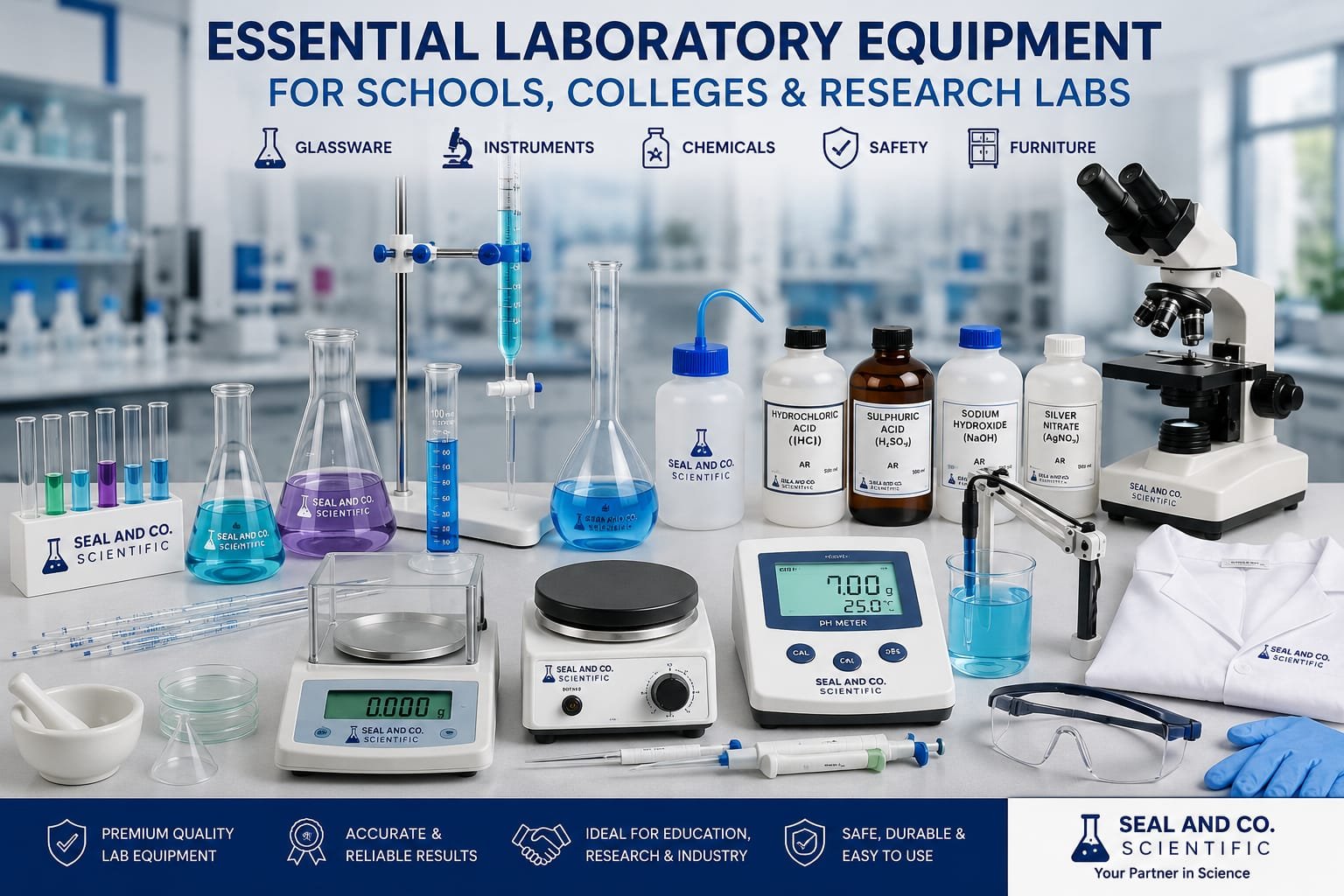
Why Proper Laboratory Equipment Matters
The right laboratory equipment helps ensure:
Accurate experimental results
Improved student learning
Safe laboratory operations
Compliance with laboratory standards
Efficient research and testing
Long-lasting laboratory infrastructure
Laboratory glassware is essential for measuring, mixing, heating, storing, and conducting experiments.
1. Beakers
2. Conical (Erlenmeyer) Flasks
3. Volumetric Flasks
4. Measuring Cylinders
5. Test Tubes
6. Boiling Tubes
7. Pipettes Burettes
8. Funnels
9. Watch Glasses
10. Glass Stirring Rods
11. Reagent Bottles
12. Wash Bottles
13. Desiccators
14. Petri Dishes
Applications
1.Chemical analysis
2.Solution preparation
3.Sample storage
4.Laboratory experiments
Modern laboratories use plasticware for lightweight, break-resistant applications.
1.Wash Bottles
2.Sample Bottles
3. Centrifuge Tubes
4.Microcentrifuge Tubes
5.Pipette Tips
6.Measuring Jugs
7.Plastic Beakers
8.Storage Containers
9.Cryo Boxes
Scientific instruments improve the accuracy and efficiency of laboratory testing.
1.Digital Balance
2.Hot Plate
3.Magnetic Stirrer
4.pH Meter
5.Conductivity Meter
6.TDS Meter
7..Spectrophotometer
8.Incubator
9. Water Bath
9.Oven
10.Muffle Furnace
11. Centrifuge
12.Microscope
13.Autoclave
Chemistry laboratories require specialized equipment for chemical reactions and analysis.
Essential items include:
1.Retort Stand
2.Clamp Stand
3.Tripod Stand
4.Bunsen Burner
5.Spirit Lamp
6.Wire Gauze
7. Crucibles Mortar and Pestle
8. Evaporating Dish
9.Separating Funnel
10.Dropperse
Biology laboratories require equipment for specimen observation and biological studies.
Examples include:
1.Compound Microscope
2.Prepared Slides
3. Dissecting Kits
4.Petri Dishes
5.Incubator
6.Forceps
7.Scalpels
8. Biological Models
Physics laboratories generally include:
1.Vernier Calipers
2. Micrometer
3.Screw Gauge
4.Optical Bench
5.Ammeter
6.Voltmeter
7.Galvanometer
8.Rheostat
9.Multimeter
10.Power Supply Unit
11.Pendulum Apparatus
Laboratory chemicals are essential for practical experiments and analytical testing.
Common laboratory chemicals include:
1.Hydrochloric Acid (HCl)
2.Sulphuric Acid (H₂SO₄)
3.Nitric Acid (HNO₃)
4.Sodium Hydroxide (NaOH)
5.Potassium Permanganate (KMnO₄)
6.Silver Nitrate
7.Ethanol
7.Methanol
8. Buffer Solutions
9.Distilled Water
Always use laboratory-grade chemicals from trusted suppliers to ensure reliable results.
Safety should always be the highest priority.
Essential safety equipment includes:
1.Safety Goggles
2.Laboratory Coats
3.Chemical-Resistant Gloves
4. Face Shields
5.Fire Extinguishers
6.First Aid Kit
7. Eye Wash
8.Bottle
9.Emergency Shower
10. Fume Hood
11.Spill Control Kit
Water testing laboratories require specialized instruments for quality analysis.
Typical equipment includes:
1.pH Meter
2.TDS Meter
3.Conductivity Meter
4. Turbidity Meter
5. DO Meter
6.COD Digester
7.BOD Incubator
8.Spectrophotometer
9.Water Sampling Bottles
10. Laboratory Furniture
Good laboratory furniture improves safety, organization, and workflow.
Recommended items include:
1.Chemical Storage Cabinets
2.Laboratory Work Benches
3.Reagent Racks
4. Instrument Tables
5.Sink Units
6.Storage Cabinets
7.Laboratory Stools
8. Fume Chambers
Before purchasing laboratory equipment, consider:
1.Product quality
2.Material durability
3.Measurement accuracy
4. Safety certifications
5.Ease of maintenance
6.Manufacturer warranty
7.Availability of spare parts After-sales support
Investing in quality equipment reduces maintenance costs and ensures dependable performance over time.
Industries & Institutions That Need Laboratory Equipment
Laboratory equipment is widely used in:
1.Schools
2.Colleges
3.Universities
4. Research Institutes
5. Diagnostic Laboratories
6. Hospitals
7.Pharmaceutical Companies
8. Food Testing Laboratories
9. Water Testing Laboratories
10. Environmental Laboratories
11.Industrial Quality Control Laboratories
12. STP & ETP Plants
13.Government Departments
Frequently Asked Questions (FAQs)
What are the most important laboratory equipment for schools?
Schools should have basic laboratory glassware, microscopes, measuring cylinders, test tubes, beakers, conical flasks, safety equipment, balances, and laboratory chemicals suitable for educational experiments.
Which laboratory equipment is essential for college chemistry labs?
College chemistry laboratories require beakers, burettes, pipettes, volumetric flasks, hot plates, balances, pH meters, laboratory chemicals, safety equipment, and analytical instruments.
What laboratory equipment is required for research laboratories?
Research laboratories often need advanced instruments such as spectrophotometers, centrifuges, incubators, analytical balances, microscopes, autoclaves, water purification systems, and specialized laboratory glassware.
How do I choose the right laboratory equipment supplier?
Look for a supplier that offers high-quality products, competitive pricing, technical support, calibration services, and reliable after-sales assistance.