Laboratory safety is the foundation of every successful scientific experiment. Whether you're a school student performing your first chemistry practical or a college researcher working with hazardous chemicals, following proper laboratory safety rules protects you, your classmates, and your surroundings.
Every year, laboratory accidents occur because of simple mistakes such as not wearing safety goggles, improper handling of chemicals, or ignoring laboratory instructions. Fortunately, most of these incidents can be prevented by following basic safety practices.
In this guide, we'll discuss the essential laboratory safety rules every science student should know before entering a laboratory.
Why Is Laboratory Safety Important?
Laboratories contain chemicals, glassware, electrical equipment, heating devices, and instruments that can cause injury if used incorrectly.
Following laboratory safety rules helps:
Prevent accidents and injuries
Protect laboratory equipment
Ensure accurate experimental results
Reduce chemical contamination
Maintain a safe learning environment
Build professional laboratory habits
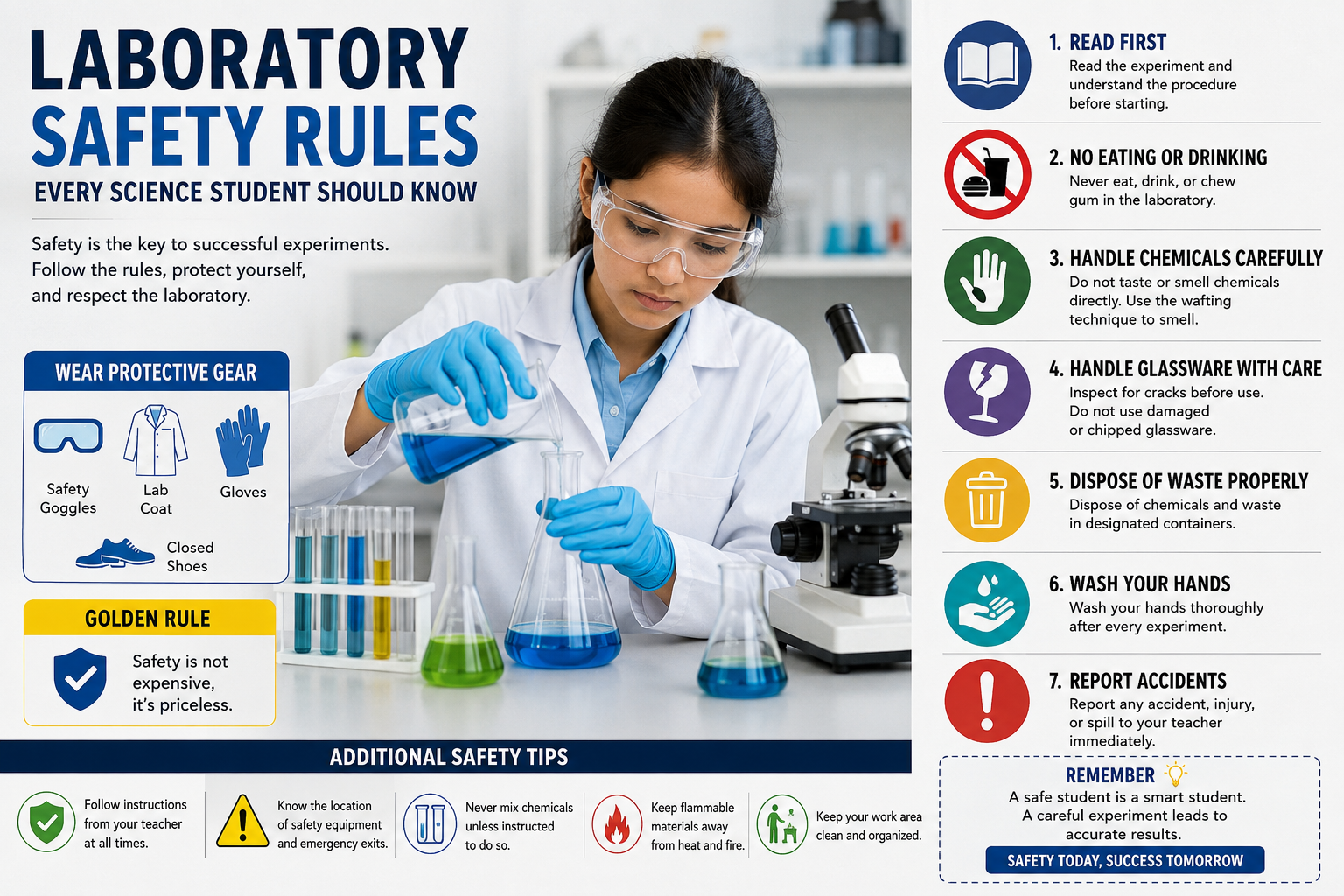
1. Wear Proper Personal Protective Equipment (PPE)
Always wear the appropriate protective equipment before beginning any experiment.Essential PPE includes:
Closed-toe shoes
Never enter a laboratory wearing sandals or loose clothing that may come into contact with chemicals or flames.
2. Read the Experiment Before Starting
Never begin an experiment without understanding the procedure.
Before starting:
Read all instructions carefully.
Identify the required chemicals and equipment.
Understand potential hazards.
Ask your teacher or supervisor if anything is unclear.
Preparation reduces mistakes and improves safety.
3. Never Taste or Smell Chemicals Directly
Chemicals should never be tasted.
If instructed to identify an odor, use the wafting technique, gently fanning vapors toward your nose instead of inhaling directly.
Many laboratory chemicals release harmful fumes that can irritate the respiratory system.
4. Always Wear Safety Goggles
Your eyes are extremely vulnerable to chemical splashes, broken glass, and flying particles.
Wear safety goggles whenever:
Mixing chemicals.
Heating liquids.
Using acids or alkalis.
Handling glassware.
Performing reactions that may splash.
5. Handle Glassware Carefully
Broken laboratory glassware can cause serious injuries.
Before use:
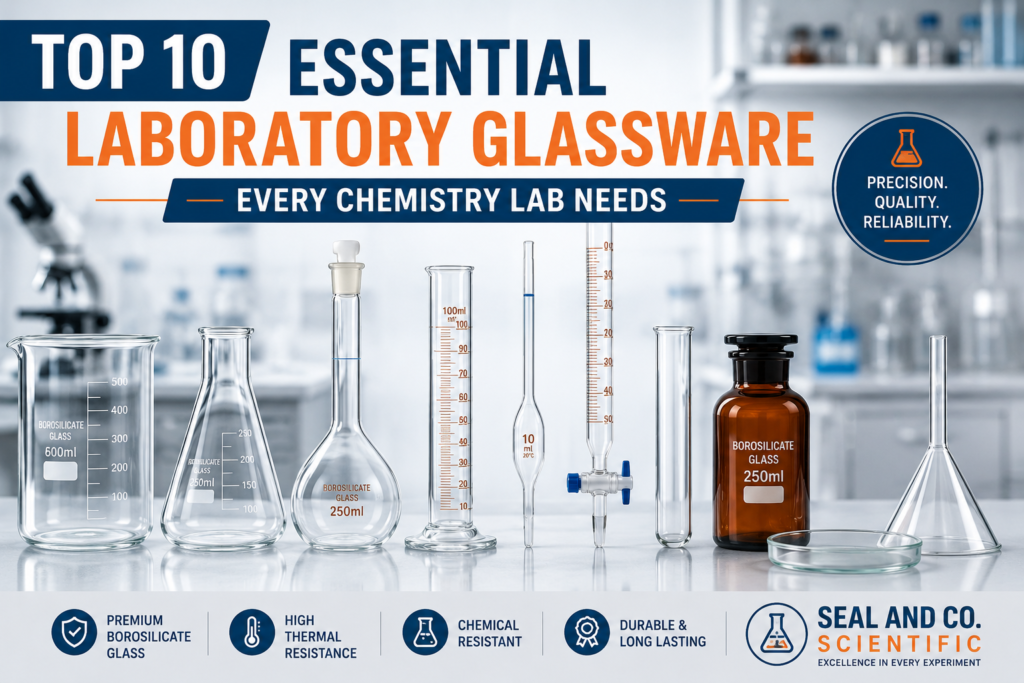
Inspect beakers, conical flasks, and test tubes for cracks.
Never use damaged glassware.
Carry glassware carefully.
Place hot glassware on heat-resistant surfaces.
Always remember that hot glass looks the same as cold glass.
6. Do Not Eat or Drink in the Laboratory
Food and drinks should never be brought into a laboratory.
Chemical residues can contaminate food, increasing the risk of accidental poisoning.
Even chewing gum is discouraged in laboratory environments.
7. Keep Your Work Area Clean
A clean workspace reduces accidents.
Always:
Wipe spills immediately.
Return chemicals to their proper place.
Organize equipment after use.
Dispose of waste correctly.
Good housekeeping is an essential part of laboratory safety.
8. Label Every Chemical Container
Never use an unlabeled chemical.Always check:
Chemical name
Concentration
Hazard warnings
Expiry date (if applicable)
Proper labeling prevents dangerous mix-ups.
9. Use Laboratory Equipment Correctly
Only use equipment after receiving proper instruction.
Common laboratory equipment includes:
Hot plates
Using the correct equipment improves both safety and accuracy.
10. Never Mix Chemicals Without Instructions
Some chemicals react violently when combined.
Never mix substances unless instructed by your teacher or laboratory manual.
Unexpected reactions may produce:
Toxic gases
FireExplosions
Excessive heat
11. Know the Location of Safety Equipment
Every laboratory should have:
Fire extinguisher
First aid kitEye wash station
Safety shower
Emergency exits
Spill control materials
Know where these are located before beginning any practical work.
12. Report Accidents Immediately
Even minor accidents should be reported.
Inform your teacher or laboratory supervisor immediately if:
You spill chemicals.
Glassware breaks.
Someone is injured.
Equipment malfunctions.
Prompt reporting helps prevent further incidents.
13. Dispose of Chemical Waste Properly
Never pour chemicals into the sink unless instructed.
Use designated waste containers for:
Acids
Bases
Organic solvents
Broken glass
Biological waste
Proper disposal protects both people and the environment.
14. Wash Your Hands After Every Experiment
Always wash your hands thoroughly with soap and water after completing laboratory work—even if you wore gloves.
This removes any invisible chemical residues.
15. Follow Your Teacher's Instructions
The most important laboratory safety rule is to follow instructions carefully.
Never perform unauthorized experiments or use equipment without permission.
Laboratory safety depends on discipline and responsibility.
Essential Laboratory Safety Equipment
Every science laboratory should be equipped with:
Safety goggles
Laboratory coats
Chemical-resistant gloves
Fire extinguisher
First aid kit
Eye wash station
Spill kit
Waste disposal containers
Regular inspection and maintenance of safety equipment are essential.
Common Mistakes Students Should Avoid
Avoid these common laboratory mistakes:
Running inside the laboratory
Ignoring safety signs
Leaving chemical containers open
Heating sealed containers
Using damaged glassware
Pipetting by mouth
Working without supervision
Forgetting to wear protective equipment
Developing safe habits early helps students become responsible scientists.
Conclusion
Laboratory safety is not just about following rules—it's about developing habits that protect yourself and those around you. By wearing proper protective equipment, handling chemicals responsibly, keeping your workspace organized, and following instructions carefully, students can perform experiments safely and confidently.
Whether you're in a school laboratory, college chemistry lab, research institute, or industrial facility, safety should always come first.
At SEAL AND CO. SCIENTIFIC, we supply high-quality laboratory glassware, plasticware, scientific instruments, safety equipment, and laboratory consumables for schools, colleges, research institutions, hospitals, water testing laboratories, and industrial laboratories across India. Our commitment is to provide reliable laboratory products that support safe, accurate, and efficient scientific work.
Frequently Asked Questions (FAQs)
Why is laboratory safety important for students?
Laboratory safety prevents injuries, protects equipment, and helps students perform experiments correctly while developing responsible scientific practices.
What is the most important laboratory safety rule?
Always follow your teacher's or laboratory supervisor's instructions and wear appropriate personal protective equipment (PPE).
Why should students wear safety goggles?
Safety goggles protect the eyes from chemical splashes, broken glass, and other laboratory hazards.
Can students eat or drink inside a laboratory?
No. Eating or drinking in a laboratory increases the risk of chemical contamination and accidental ingestion of hazardous substances.
What should you do if a chemical spill occurs?
Immediately inform your teacher or laboratory supervisor and follow the laboratory's spill response procedures. Do not attempt to clean hazardous spills without proper guidance.