Setting up a new school is an exciting journey, but one of the most important investments is building well-equipped science laboratories. A properly designed laboratory not only helps students understand scientific concepts through practical learning but also ensures compliance with educational board requirements such as CBSE, ICSE, and various State Boards.
Whether you're establishing a new CBSE-affiliated school or upgrading an existing institution, careful laboratory planning can save both time and money while creating a safe and inspiring learning environment.
In this guide, we'll cover everything you need to know about laboratory setup—from planning and furniture to laboratory equipment, chemicals, safety standards, and maintenance.
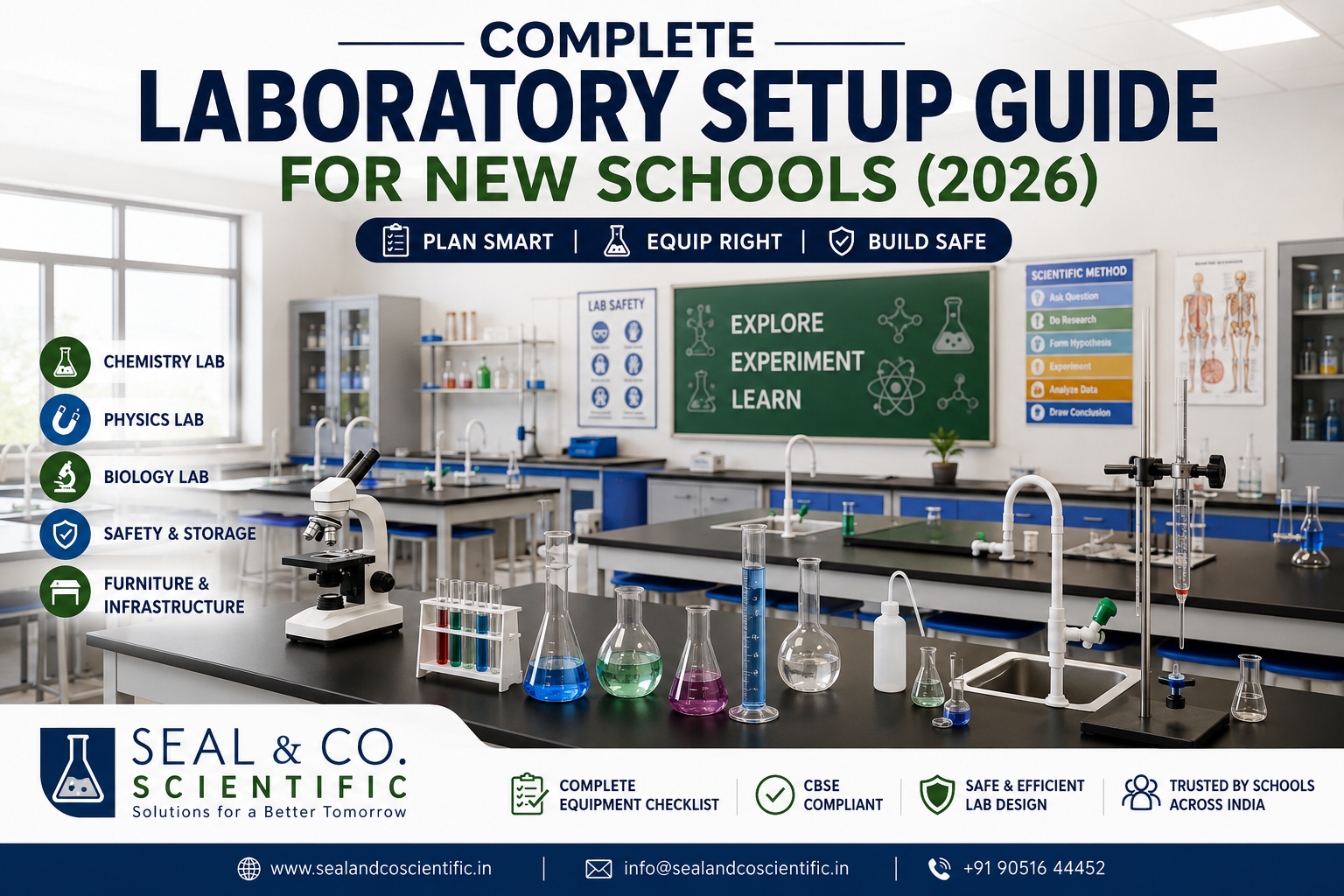
Why Science Laboratories Matter
Science education is incomplete without practical experiments.
A modern laboratory enables students to:
Understand theoretical concepts.
practically Develop scientific thinking.
Improve observation skills.
Build confidence through experimentation.
Prepare for board practical examinations.
Learn laboratory safety and discipline.
Well-equipped laboratories also improve a school's infrastructure and make it more attractive during admissions.
Before purchasing equipment, plan the laboratory layout carefully.
Important considerations include:
1. Student capacity
2. Separate laboratories for Physics, Chemistry, and Biology (for secondary & senior secondary schools)
3. Proper ventilation
4. Natural lighting
5. Water supply
6. Drainage system
7. Electrical connections
8. Emergency exits
9. Chemical storage area
10. Teacher demonstration table
A well-designed laboratory improves workflow and minimizes accidents.
Laboratory furniture should be durable, chemical-resistant, and ergonomically designed.
Typical laboratory furniture includes:
1. Laboratory work benches
2. Teacher demonstration table
3. Reagent racks
4. Chemical storage cabinets
5. Instrument cupboards
6. Wall cabinets
7. Sink units
8. Laboratory stools
9. Balance table
10. Fume hood (where required)
Good laboratory furniture can easily last for decades with proper maintenance.
Every school chemistry laboratory should include:
1. Beakers
2. Conical flasks
3. Volumetric flasks
4. Measuring cylinders
5. Pipettes
6. Burettes
7. Test tubes
8. Test tube stands
9. Funnels
10. Wash bottles
11. Glass rods
11. Watch glasses
12. Crucibles
13. Mortar & pestle
14. Bunsen burner or spirit lamp
15. Tripod stand
16. Wire gauze
17. Thermometers
18. pH papers
19. Digital weighing balance
High-quality borosilicate glassware offers better durability and thermal resistance.
A Physics laboratory should include:
1. Vernier calipers
2. Screw gauge
3. Meter scale
4. Measuring tapes
5. Pendulum apparatus
6. Optical bench
7. Convex and concave lenses
8. Mirrors
9. Prism
10. Magnets
11. Galvanometer
12. Ammeter
13. Voltmeter
14. Resistance box
15. Rheostat
16. Power supply
17. Multimeter
18. Stopwatch
19. Spring balance
Students should have access to sufficient instruments for group experiments.
A Biology laboratory generally requires:
1. Compound microscopes
2. Prepared slides
3. Blank slides
4. Cover slips
5. Dissecting kits
6. Models of human organs
7. Plant models
8. Animal models
9. Skeleton model
10. Botanical specimens
11. Laboratory charts
12. Forceps
13. Scalpels
14. Droppers
15. Petri dishes
16. Specimen jars
Visual learning tools greatly enhance biology education.
Chemistry laboratories require standard laboratory-grade chemicals.
Common examples include:
1. Hydrochloric Acid
2. Sulphuric Acid
3. Nitric Acid
4. Sodium Hydroxide
5. Potassium Hydroxide
6. Copper Sulphate
7. Sodium Chloride
8. Potassium Permanganate
9. Silver Nitrate
10. Ethanol
11. Acetic Acid
12. Ammonium Hydroxide
13. Indicators
14. Buffer solutions
Always purchase chemicals from trusted manufacturers and maintain proper labeling.
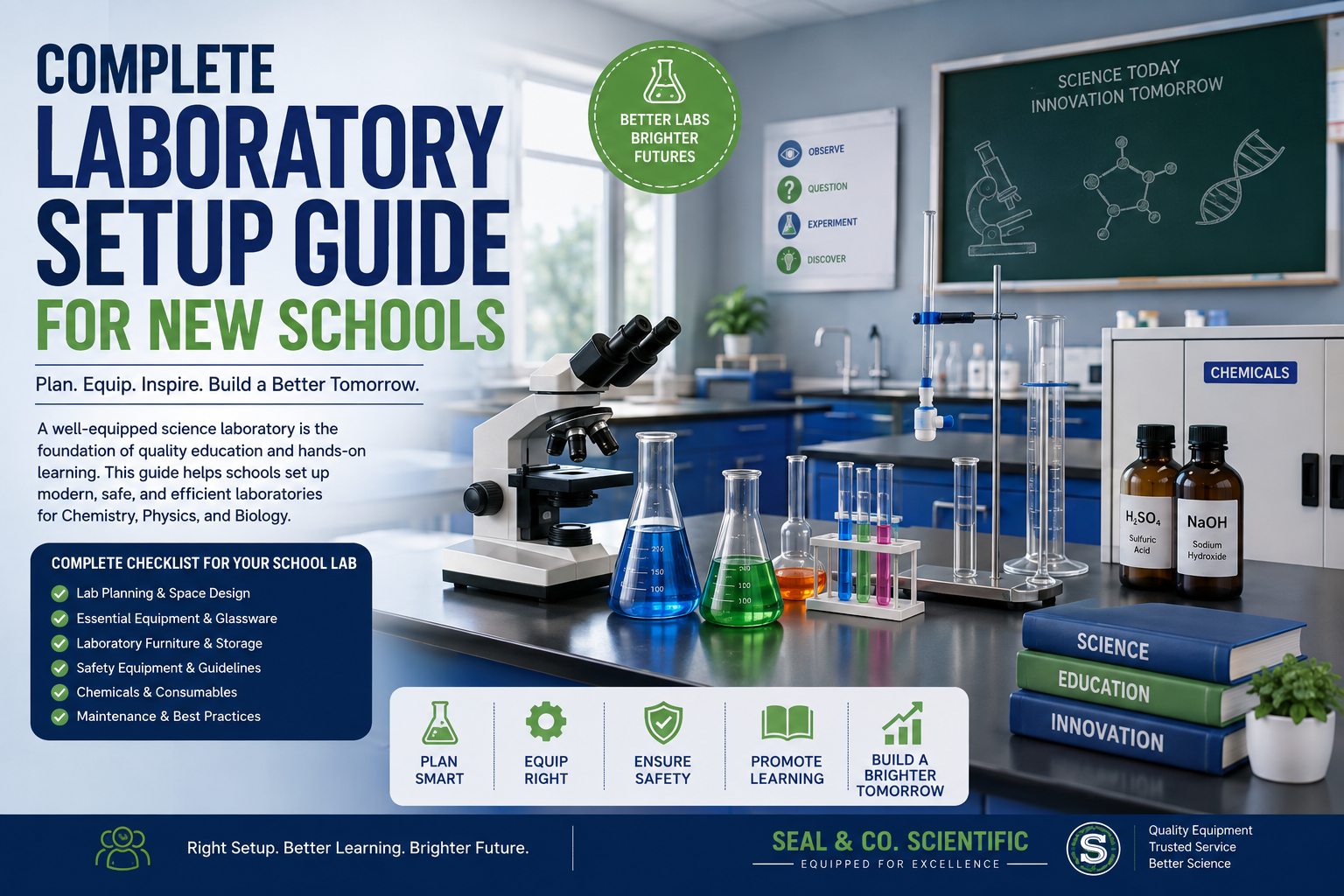
Safety should never be compromised.
Every laboratory should have:
1. Fire extinguisher
2. First aid box
3. Eye wash bottle
4. Safety goggles
5. Laboratory coats
6. Hand gloves
7. Face shields (where required)
8. Sand bucket
9. Spill kit
10. Emergency contact chart
11. Safety instruction board
Students should receive basic laboratory safety training before practical classes.
Proper storage improves laboratory efficiency.
Recommended storage includes:
1. Separate acid cabinet
2. Alkali storage
3. Glassware cupboards
4. Locked chemical cabinets
5. Instrument storage racks
6. Labelled drawers Inventory register
Good organization reduces breakage and makes laboratory management easier.
Step 9: Follow Board Requirements
Before purchasing equipment, verify your board's laboratory requirements.
Generally, schools should ensure:
1. Adequate student seating
2. Sufficient practical equipment
3. Standard laboratory furniture
4. Safety arrangements
5. Proper lighting and ventilation
6. Chemical storage compliance
7. Laboratory record maintenance
Meeting these standards simplifies inspections and affiliation processes.
Selecting the right laboratory supplier is just as important as selecting the equipment.
A reliable supplier should provide:
1. Genuine laboratory products
2. Standard brands
3. Installation support
4. Competitive pricing
5. Product warranty
6. Technical guidance
7. After-sales service
8. Fast delivery
Working with a single supplier also simplifies procurement and maintenance.
Common Mistakes to Avoid
Many schools make avoidable mistakes during laboratory setup.
Avoid:
1. Buying low-quality glassware
2. Ignoring laboratory safety
3. Purchasing unnecessary equipment
4. Poor laboratory layout
5. Inadequate electrical planning
6. Improper chemical storage
7. Lack of inventory management
Proper planning helps prevent unnecessary future expenses.
At Seal and Co. Scientific, we assist schools in planning and supplying complete science laboratory solutions.
Our offerings include:
1. Complete laboratory setup consultation
2. Physics laboratory equipment
3. Chemistry laboratory equipment
4. Biology laboratory equipment
5. Borosil laboratory glassware
6. Laboratory chemicals
7. Laboratory furniture
8. Laboratory safety products
9. School laboratory consumables
Whether you're building a new school or upgrading an existing laboratory, we can help you choose the right products according to your requirements and budget.
Frequently Asked Questions
What laboratories are required in a new CBSE school?
Most secondary and senior secondary schools require separate Physics, Chemistry, and Biology laboratories, along with appropriate safety arrangements.
Which glassware is best for school laboratories?
Borosilicate glassware is recommended because it offers excellent thermal and chemical resistance.
How often should laboratory chemicals be replaced?
Chemicals should be inspected regularly, and expired or contaminated chemicals should be disposed of safely according to applicable guidelines.
What is the most important factor in laboratory planning?
Safety, proper layout, quality equipment, and compliance with educational standards are the key priorities.
A well-planned science laboratory creates a strong foundation for quality education. Investing in durable laboratory furniture, reliable instruments, quality chemicals, and proper safety equipment ensures students gain valuable hands-on experience while maintaining a safe learning environment.
By planning carefully and working with an experienced laboratory supplier, new schools can establish modern laboratories that serve students effectively for many years.