
Laboratory chemicals play a vital role in education, research, healthcare, pharmaceuticals, and industrial testing. Whether you're managing a school chemistry lab, a college laboratory, or an industrial facility, proper storage and handling of chemicals are essential for ensuring safety, maintaining chemical quality, and complying with laboratory best practices.
Improper storage can lead to chemical degradation, contamination, dangerous reactions, fire hazards, and health risks. This guide explains the essential principles of storing and handling laboratory chemicals safely.
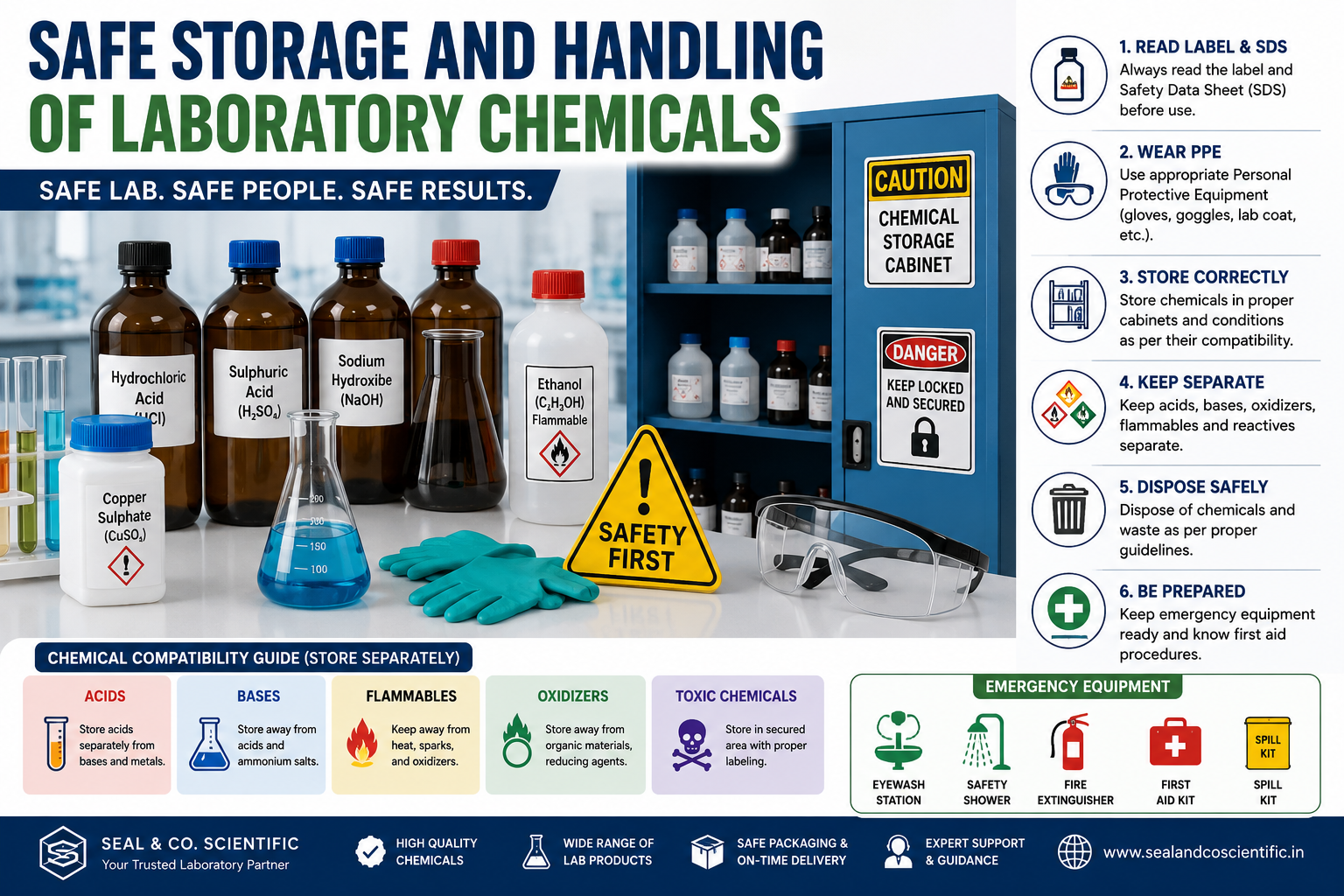
Why Is Proper Chemical Storage Important?
Safe chemical storage helps to:
1. Protect laboratory personnel from accidents and injuries.
2. Prevent unwanted chemical reactions.
3. Maintain the purity and effectiveness of chemicals.
4. Extend the shelf life of laboratory reagents.
5. Reduce the risk of spills, fires, and environmental contamination.
6. Support a well-organized and efficient laboratory.
Whether you use laboratory chemicals daily or occasionally, following proper storage procedures is a critical part of laboratory safety.
General Rules for Safe Chemical Handling
Every laboratory should establish standard operating procedures (SOPs) for handling chemicals.
Some fundamental safety practices include:
1. Read the chemical label before use.
2. Review the Safety Data Sheet (SDS) for hazards and first-aid information.
3. Wear appropriate Personal Protective Equipment (PPE).
4.Never eat, drink, or smoke inside the laboratory.
5. Avoid direct contact with chemicals.
6. Never smell chemicals directly; use proper laboratory techniques if identification by odor is required.
7. Use chemicals only for their intended laboratory purpose.
8. Keep workspaces clean and organized.
Wear Appropriate Personal Protective Equipment (PPE)
Proper PPE reduces the risk of chemical exposure.
Recommended laboratory PPE includes:
1. Laboratory coat
2. Chemical-resistant gloves
3. Safety goggles
4. Face shield (when necessary)
5. Closed-toe safety shoes
6. Respiratory protection when required by the chemical hazard assessment
Always inspect PPE before use and replace damaged equipment immediately.
Store Chemicals According to Their Hazard Class
One of the most common laboratory mistakes is storing incompatible chemicals together.
Chemicals should be grouped based on their chemical properties rather than alphabetically.
Typical storage groups include:
Acids
Store mineral acids separately from bases and away from reactive metals.
Bases (Alkalis)
Keep alkalis separate from acids to prevent dangerous neutralization reactions.
Flammable Chemicals
Store flammable solvents such as ethanol, methanol, and acetone in approved flammable storage cabinets, away from heat sources and ignition points.
Oxidizing Agents
Keep oxidizers away from combustible and organic materials.
Toxic Chemicals
Store toxic chemicals in secure, clearly labeled storage areas with restricted access where appropriate.
Label Every Chemical Container Clearly
Proper labeling prevents confusion and reduces laboratory accidents.
Every container should include:
1. Chemical name
2. Concentration (if applicable)
3. Hazard information
4. Date received or prepared
5. Expiry or recommended review date (where applicable)
6. Responsible laboratory or user (if required by your procedures)
Never use chemicals from unlabeled containers.
Maintain Proper Storage Conditions
Different chemicals require different storage environments.
General recommendations include:
1. Store chemicals in a cool, dry, and well-ventilated area.
2. Protect light-sensitive chemicals from direct sunlight.
3. Keep containers tightly closed when not in use.
4. Avoid excessive heat and humidity.
5. Store heavy chemical bottles on lower shelves to reduce the risk of injury if dropped.
Always follow the manufacturer's storage recommendations on the label or Safety Data Sheet (SDS).
Inspect Chemicals Regularly
Routine inspections help identify potential safety risks before they become serious.
Check for:
1. Damaged containers
2. Corrosion or rust
3. Crystallization around bottle capseaks
4. Expired chemicals
5. Missing or damaged labels
Dispose of expired or degraded chemicals according to your organization's waste disposal procedures and local regulations.
Safe Chemical Transportation Inside the Laboratory
When moving chemicals:
1. Use bottle carriers or secondary containment for larger containers.
2. Keep lids tightly closed.
3. Avoid carrying multiple heavy bottles at once.
4. Transport chemicals carefully to prevent spills.
Emergency Preparedness
Every laboratory should be prepared for chemical emergencies.
Essential emergency equipment includes:
1. Eyewash station
2. Safety shower
3. Fire extinguisher suitable for laboratory hazards
4. Chemical spill kit
5. First-aid kit
6. Emergency contact numbers displayed prominently
Ensure all laboratory personnel know emergency procedures and receive appropriate safety training.
Common Mistakes to Avoid
Avoid these common laboratory safety errors:
1. Mixing incompatible chemicals.
2. Storing acids and bases together.
3. Using damaged chemical containers.
4. Ignoring expired chemicals.
5. Working without PPE.
6. Leaving chemical bottles open.
7. Blocking emergency exits or safety equipment.
8. Storing chemicals near food or drinking water.
School laboratories should take extra precautions because students are still learning safe laboratory practices.
Teachers and laboratory assistants should:
Store hazardous chemicals in locked cabinets.
Keep only the quantities needed for practical work readily accessible.
Supervise all laboratory activities.
Demonstrate safe handling techniques before experiments.
Ensure students wear appropriate PPE.
Maintain an updated chemical inventory.
Frequently Asked Questions (FAQs)
Why is proper chemical storage important?
Proper storage reduces the risk of accidents, preserves chemical quality, and helps maintain a safe laboratory environment.
Can acids and bases be stored together?
No. Acids and bases should be stored separately to prevent hazardous reactions in the event of leaks or spills.
What is the most important PPE for handling laboratory chemicals?
The appropriate PPE depends on the chemical being handled, but laboratory coats, chemical-resistant gloves, and safety goggles are commonly required.
Why should chemicals be labeled properly?
Clear labels help users identify chemicals, understand hazards, and avoid dangerous mistakes.
How often should laboratory chemicals be inspected?
Laboratories should perform regular inspections based on their inventory size and institutional procedures to check for damage, leaks, missing labels, or expired chemicals.
Conclusion
Safe storage and handling of laboratory chemicals are fundamental to maintaining a secure and efficient laboratory. By following good storage practices, using appropriate PPE, labeling containers correctly, and inspecting chemicals regularly, laboratories can significantly reduce risks while protecting personnel and preserving chemical quality.
Whether you're operating a school laboratory, college chemistry department, research facility, hospital laboratory, or industrial testing laboratory, investing in proper chemical safety practices is essential for long-term success.
Seal & Co. Scientific supplies high-quality laboratory chemicals, reagents, laboratory glassware, and scientific equipment for schools, colleges, research laboratories, hospitals, and industries. We are committed to providing reliable products that support safe and efficient laboratory operations.